How to Evaluate Whether a Facade Concept Is Actually Buildable?
Jun 04, 2026During project review meetings, I often hear a seemingly simple question:
“Can this facade be built?”
At first glance, it sounds straightforward.
In reality, it is one of the most difficult questions in facade engineering.
Because from an engineering perspective, most facade concepts are not simply a matter of being "buildable" or "unbuildable."
The real question is:
What will it take to build it?
If budget were unlimited, schedules were flexible, and technical resources were unrestricted, almost any facade concept could be realized.
But real projects do not operate under those conditions.
Every project is constrained by cost, time, manufacturing capability, transportation limitations, and site conditions.
For that reason, I believe that evaluating whether a facade concept is buildable is not about asking whether it can be constructed.
It is about determining whether it can be delivered within a reasonable budget, a realistic schedule, and an acceptable level of risk.
That is where engineering thinking begins.
Architects are responsible for creating form, space, and identity.
Engineers are responsible for turning those ideas into reality.
Many remarkable buildings begin with bold concepts.
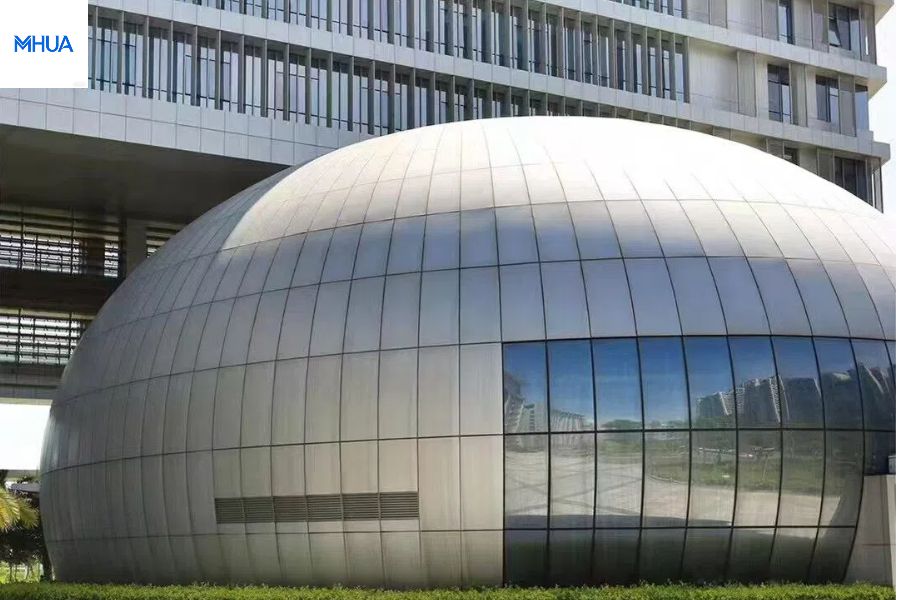
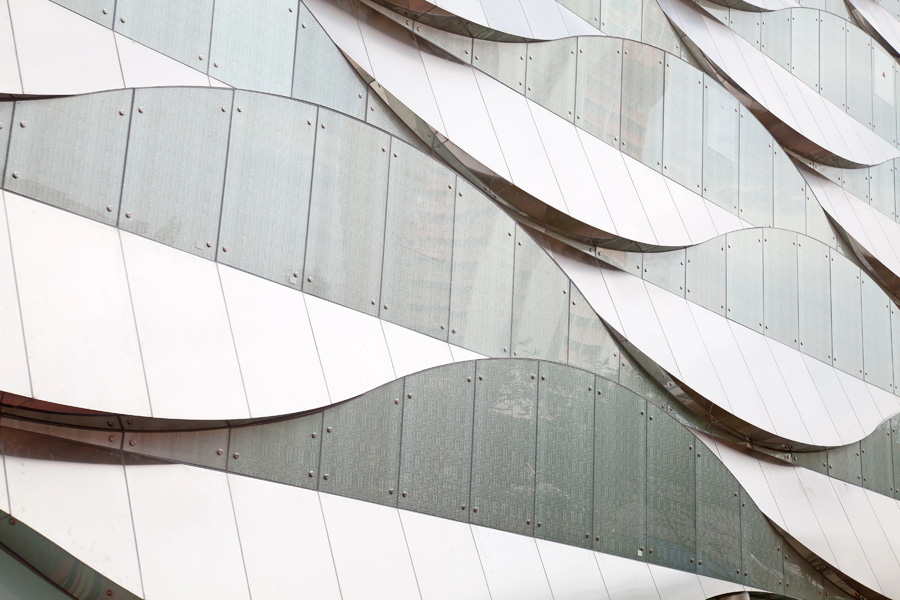
Free-form geometries, double-curved surfaces, oversized glazing, minimalist details, and increasingly complex facade expressions continue to push architecture forward.
Yet behind every ambitious design lies a practical question:
Where are the engineering boundaries?
Design can challenge imagination.
Engineering must respect physical reality.
Gravity does not change because of a design concept.
Material performance does not adapt to architectural intent.
Manufacturing tolerances, transportation restrictions, and installation conditions cannot be ignored simply because a rendering looks impressive.
A good facade engineer is not someone who tells architects what cannot be done.
A good facade engineer helps project teams understand:
This is one of the most noticeable changes I have observed over the years.
Architectural design is evolving faster than manufacturing technology.
Today, a complex free-form facade can be modeled in a matter of hours.
Parametric design tools can generate hundreds of facade variations within minutes.
But once a concept enters the engineering phase, reality begins to take over.
A free-form facade may require hundreds of uniquely shaped glass panels.
A minimalist detail may demand extremely tight manufacturing tolerances.
A continuously changing geometry may require sophisticated positioning and installation systems.
The journey from a digital model to a completed building remains long and complex.
And many project challenges emerge precisely during that transition.
The design may already be complete.
But the engineering process has only just begun.
When reviewing a facade concept, I am less interested in whether it is technically possible.
Instead, I focus on a different set of questions.
Does the design have a reliable manufacturing strategy?
Can it be transported safely and efficiently?
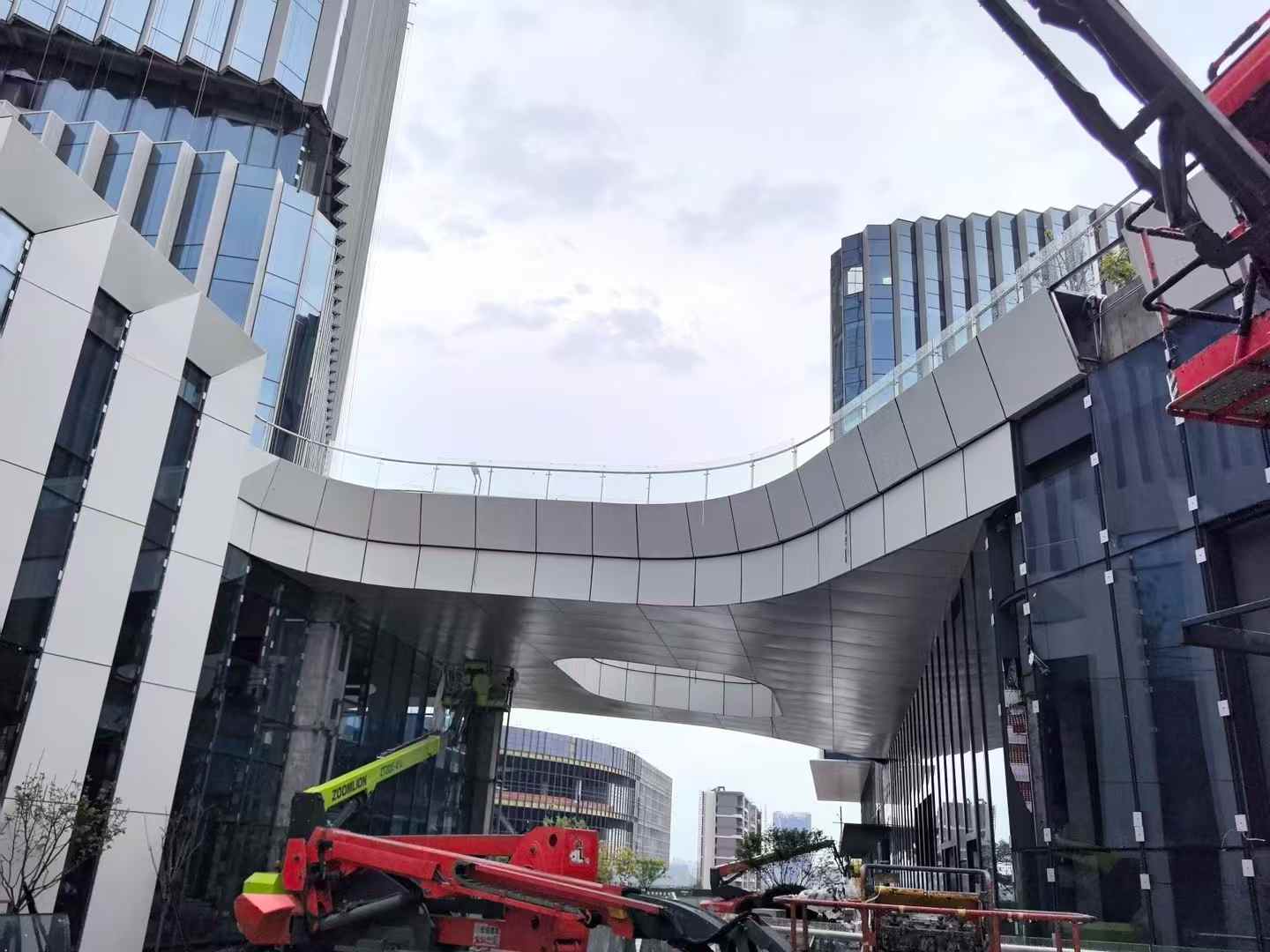
Can it be installed under actual site conditions?
Will it remain practical to maintain and replace over its service life?
Most importantly:
Does the project team fully understand the cost and risk implications of these decisions?
Because the value of a design is not measured under ideal conditions.
It is measured by how well it performs when confronted with real-world constraints.
After working on many different projects, I have noticed an interesting pattern.
The most successful projects are rarely the most complex.
Nor are they the most technically aggressive.
What they often share is balance.
The architectural vision is preserved.
Engineering realities are respected.
Manufacturing, transportation, installation, and long-term maintenance are considered as part of a single strategy.
These projects tend to be more predictable.
Risks are easier to manage.
And successful delivery becomes far more achievable.
Whenever someone asks me:
“Can this facade be built?”
I usually think about a different question first:
“Do we fully understand what it will take to build it?”
Because in facade engineering, buildability is not simply a technical judgment.
It is the result of balancing design ambition, engineering capability, project budget, and schedule requirements.
In my experience, the most successful facade concepts are not necessarily the most complex.
They are the ones that find the right balance between architectural aspiration and engineering reality.
Because only then can a concept become more than a design.
It can become a building.
Many cost problems do not begin during procurement or construction.
In reality, they are often embedded in the design long before the first material is ordered.
In the next article, we will explore the engineering decisions that have the greatest impact on facade project costs—and why some projects exceed expectations before construction even begins.
Connect with our project consultant on LinkedIn: https://www.linkedin.com/in/kevin-zhang-5908613a6
#FacadeEngineering
#BuildingEnvelope
#CurtainWall
#Architecture
#ProjectDelivery