Why Does Insulated Glass Develop Condensation Inside?
Jun 30, 2026It is widely recognized that one of the most common quality issues affecting insulated glass units (IGUs) is condensation forming within the sealed air space during service. This phenomenon often confuses users, but what is actually causing it? Let's take a closer look.
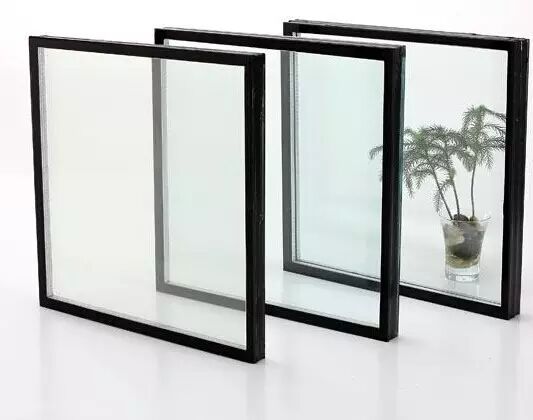
As a new generation of energy-efficient building material, insulated glass is widely appreciated for its excellent thermal insulation and sound insulation performance. As its application continues to increase, higher quality requirements are also being placed on insulated glass products.
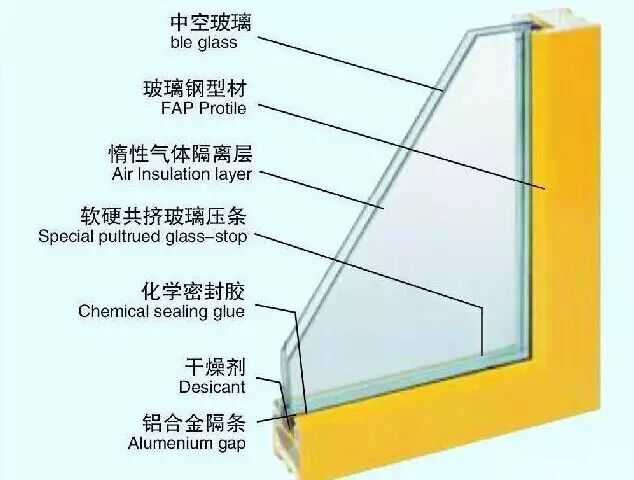
During service, when the ambient temperature drops to the point where the inner glass surface reaches the dew point of the dry air sealed inside the insulated glass unit, condensation or frost will form on the inner surface of the glass. The formation of condensation or frost inside the insulated glass cavity will affect the performance of the insulated glass unit.
If the dew point of the sealed air space remains below –40°C, condensation will not occur inside the insulated glass unit under normal service conditions.
The dew point of an insulated glass unit refers to the temperature at which the air sealed inside the cavity reaches saturation. When the temperature falls below this point, the water vapor contained within the air space condenses into liquid water.
In other words, the higher the moisture content inside the sealed air space, the higher the dew point temperature becomes. When the temperature of the inner glass surface falls below the dew point of the air inside the cavity, moisture in the air will condense or form frost on the inner surface of the glass.
An increase in the dew point of an insulated glass unit is caused by moisture entering the sealed air space without being absorbed by the desiccant. There are three primary reasons that may lead to an increase in the dew point:
(1) Air bubbles are present within the sealant, allowing moisture from the outside air to enter the sealed cavity.
(2) Water vapor diffuses through the polymer sealant and gradually enters the air space.
(3) The desiccant has insufficient effective moisture adsorption capacity.
The production environment primarily affects the adsorption capacity of the desiccant and its remaining adsorption capacity.
This can mainly be achieved by selecting sealants with a low water vapor permeability coefficient, determining an appropriate seal thickness, and reducing the temperature difference between the inside and outside of the insulated glass unit during production (that is, maintaining production within a controlled temperature range and avoiding excessive temperature variations).
The exposure time of the desiccant to the atmosphere should be minimized as much as possible in order to reduce the loss of its adsorption capacity and maintain a higher moisture adsorption capability.
The vent holes in the spacer bar should be as small as possible to reduce the moisture absorption of the molecular sieve during the manufacturing process.
A desiccant with a high and long-lasting moisture adsorption capacity should be selected.
In summary, condensation inside the air space occurs because the dew point within the sealed cavity rises during the service life of the insulated glass unit. Therefore, controlling the dew point is the key to ensuring the quality of insulated glass units.
By now, the cause of this phenomenon should be clear. It is believed that through proper control of material selection, manufacturing processes, and production environment at every stage, the quality of insulated glass units can be significantly improved.
Condensation occurs when moisture enters the sealed air space and the dew point rises above the temperature of the inner glass surface. This is usually related to seal failure, moisture diffusion, or insufficient desiccant performance.
In most cases, yes. Internal condensation generally indicates that the insulated glass unit has lost its ability to maintain a dry sealed cavity.
Unfortunately, no. Once moisture has entered the sealed cavity, the insulating glass unit usually cannot be restored. Replacement is typically the only long-term solution.
Kevin Zhang
MHUA Curtain Wall Technology Co., Ltd.
LinkedIn:Connect with Kevin Zhang on LinkedIn
Kevin Zhang specializes in facade design development, Rhino + Grasshopper modeling, curtain wall technical support, and integrated facade supply chain solutions.
The insights shared in this article are based on practical project experience and industry research.